


Bringing Bach to Life
Excerpts from a talk by Canadian pianist Angela Hewitt at the Athenaeum on 30 October 2001
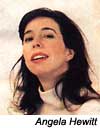 "I was fortunate as regards Bach playing, to grow up thinking that there was nothing "wrong" with playing Bach on the piano. I never had any complexes about doing so. I knew it was originally written for harpsichord, and had one in my bedroom for a year when I was a child (somebody went away on sabbatical and left it to us for that time), but the piano was always my instrument.
For me, the piano can do everything Bach demands, and so far there hasn't been one point in all his keyboard music where I wish I were playing another keyboard instrument - be it harpsichord, clavichord, or organ. Sometimes, mind you, I wish I were a violinist, or a singer, or an oboist, but the piano can at least strive to imitate all of these very successfully. In the last year of his life, Bach tried a fortepiano that was being developed by his friend, Gottfried Silbermann, but he evidently found it weak in the high register, and too hard to play (those are complaints I often have about modern concert grands!).
His music requires great sprightliness, clarity, rapidity, warmth, strength and subtle shadings that have to be matched by both instrument and player. If Bach's music sounds "wrong" on the piano, then surely most of the blame must lie with the pianist. The biggest advantage the piano has over the harpsichord is in its ability to sustain notes, and thus to produce a beautiful singing line. It is also marvellous for distinguishing the different voices, allowing a different tone colour for each. It is indeed a pleasure to be with you this evening, and to speak about my approach to playing Bach on the piano-certainly one of my favourite subjects. "
Further excerpts from Angela Hewitt's text are available by email