|

RPS Annual Lecture 2001
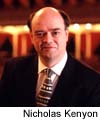
Nicholas Kenyon: Tradition isn't what it used to be (excerpts)
RPS Lecture given at the Barbican Centre on 24 February 2001"When Bernard Haitink came off the stage after giving an electrifying performance of Beethoven's Seventh with the Berlin Philharmonic at last year's Proms, he looked at me with a twinkle and said 'ah, just some old fashioned Beethoven for you, Nick'. But it wasn't. It was an absolute model of what an up-to-date modern Beethoven performance could be, a performance that had absorbed some of the best insights of the period-instrument movement while remaining resolutely crafted out of the sound of the Berlin Philharmonic, achieving miracles of textural clarity (how often do you hear the single first flute ascending above the orchestra in the final bars?). It made me think again about what is old-fashioned and what isn't, how tradition changes before our eyes and ears, how performance styles change and how performing traditions get established."
"A performer of genius like that is someone who can persuade us that his or her performance is the only possible one for the length of time it takes. A performer of talent may nudge a performing style one way or the other, have a modest influence on how others perform. A performer of talent in tune with the temper of the times will pick up the mannerisms and nuances of current fashion and work effectively with them (I'm leaving you to add your own names here, by the way). A maverick will argue against the style of the times and may then change it. But man of a genius in tune with the temper of the times can change performing tradition quite decisively."
"Tradition used to be the Vienna Philharmonic claiming that because as an institution it had its roots in Beethoven's Vienna it had passed on the truth about this music, Simple. But that was really just the old game of Chinese Whispers, by which A speaks to B speaks to C and by the time you reach Z, especially as it is now a couple of centuries later, the message has completely changed. This must be true, especially as those generations saw the growth of public concerts, the expansion of the orchestra and the development of instrument technology, to project into larger and larger halls, not to mention the cultural and political changes that drove musicians across Europe into exile. How could performance not be affected by all this?"
"Even the musico-politically correct director of the Barbican Centre feels he can dislike Brahms with impunity these days: in the leaflet for the next LSO series Bohemian Spring John Tusa says of Dvorak's symphonies that they have 'a limpidity, a purity of sound and a clarity of structure that leave me satisfied in a way that Brahms' heaving muddiness cannot'. Now I won't guess whose Brahms he's been listening to recently, but the fact that John Tusa can say that shows how much taste has moved on. Thirty years ago Brahms symphonies, Tchaikovsky symphonies and Beethoven symphonies might have been central for Prom-goers and conductors. They are still in the repertory, of course, and highly valued … but the symphonic pieces that conductors want to do and audiences throng to hear are very different: Mahler 2, Mahler 5, Shostakovich 5, Shostakovich 10, Prokofiev 5…"











|
The
Royal Philharmonic Society |